Power On
Power reaches the film.
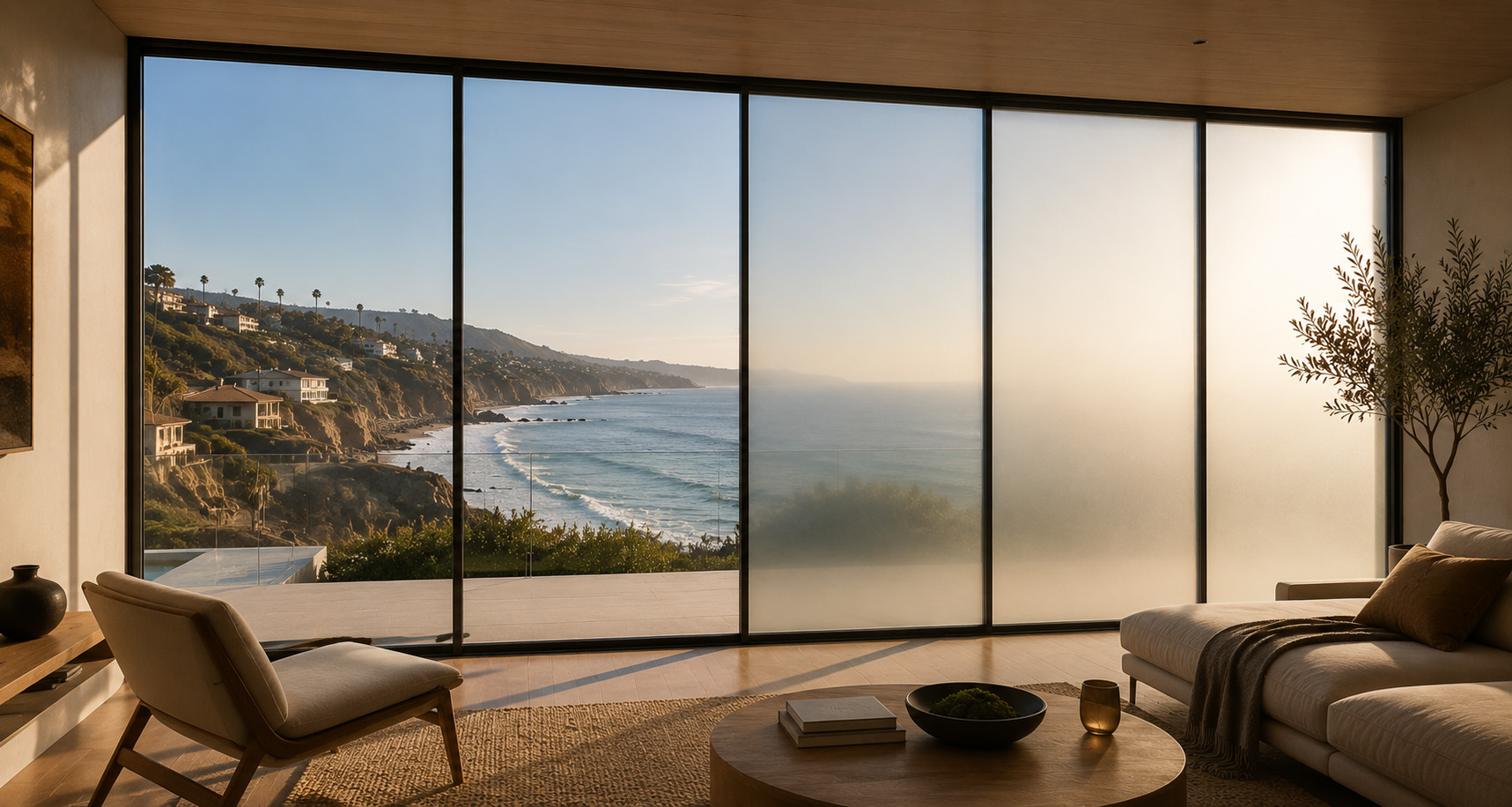
An electrically controlled film changes glass from a clear viewing state to frosted privacy. Choose a remote, wall control, or compatible home and building integration.
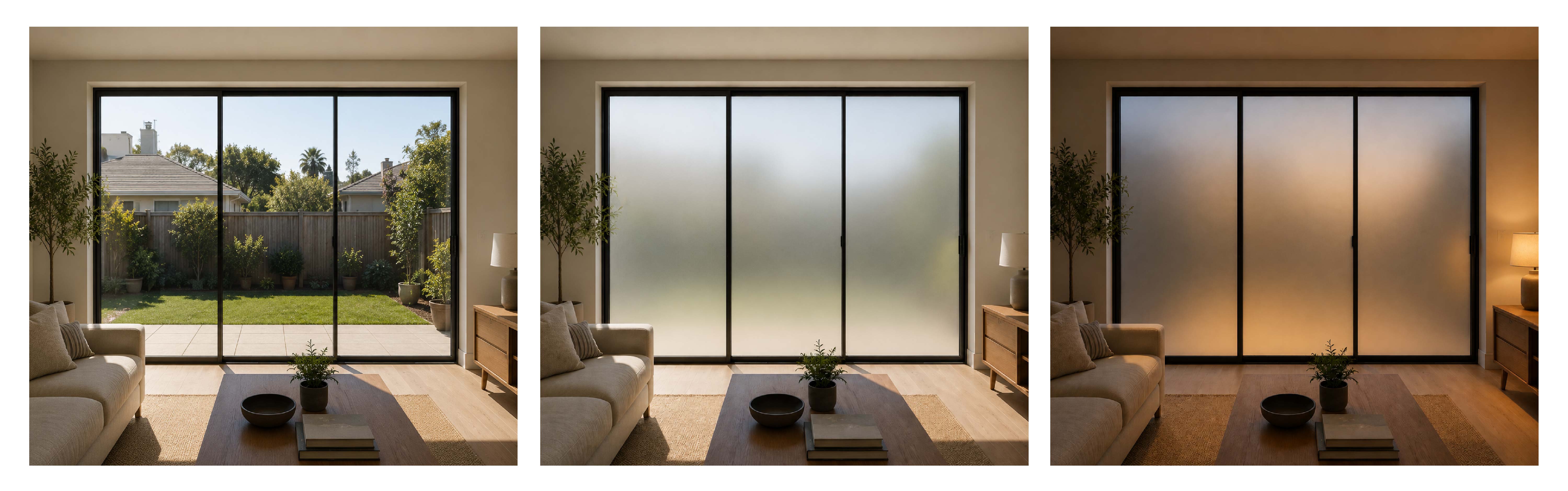
Compare the two states in this reference demonstration.
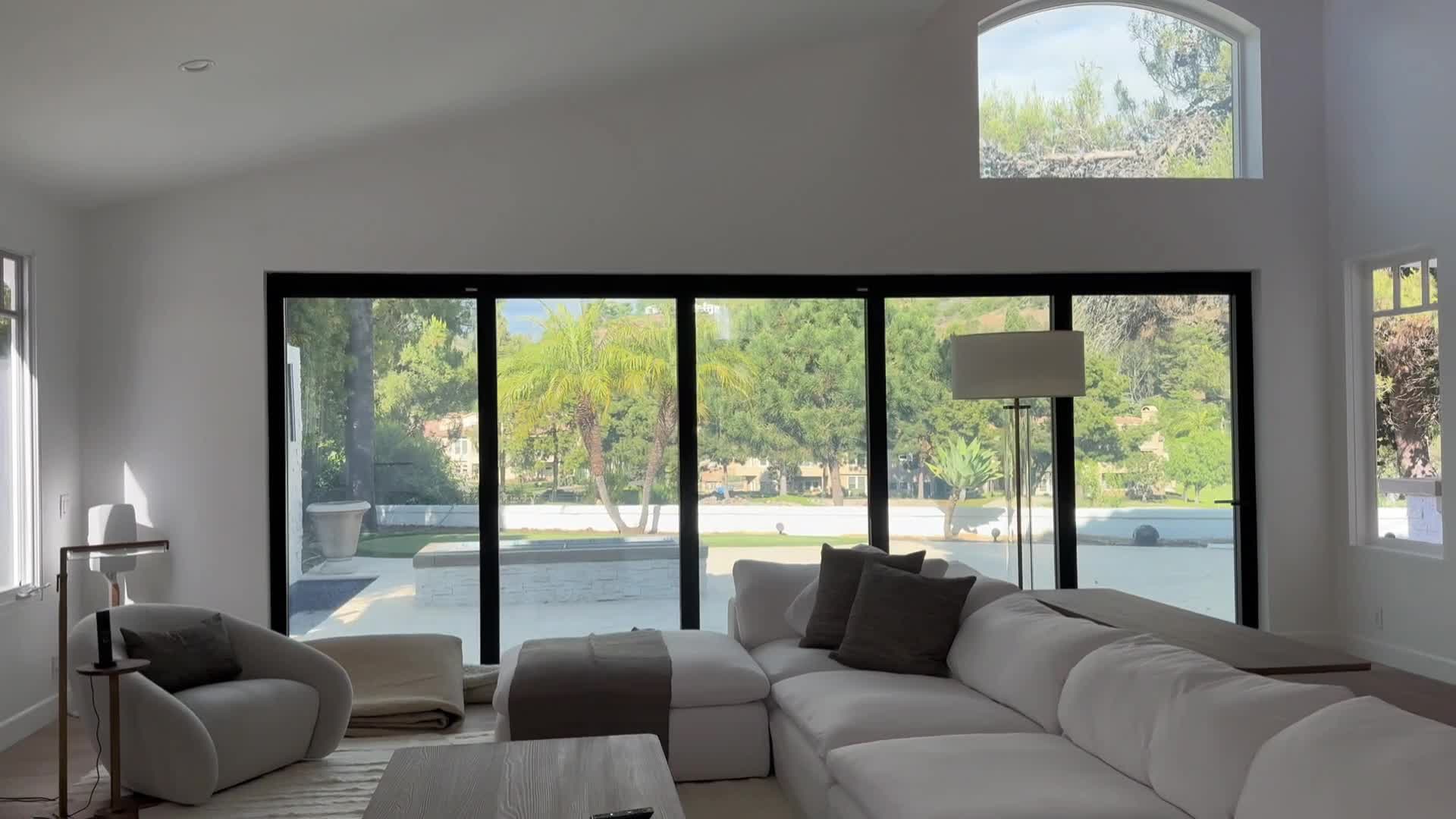
An open view through the glass.
Clear mode can retain some haze. Frosted mode obscures the view in both directions and allows diffused light through. Strong backlighting or someone close to the glass may reveal silhouettes.
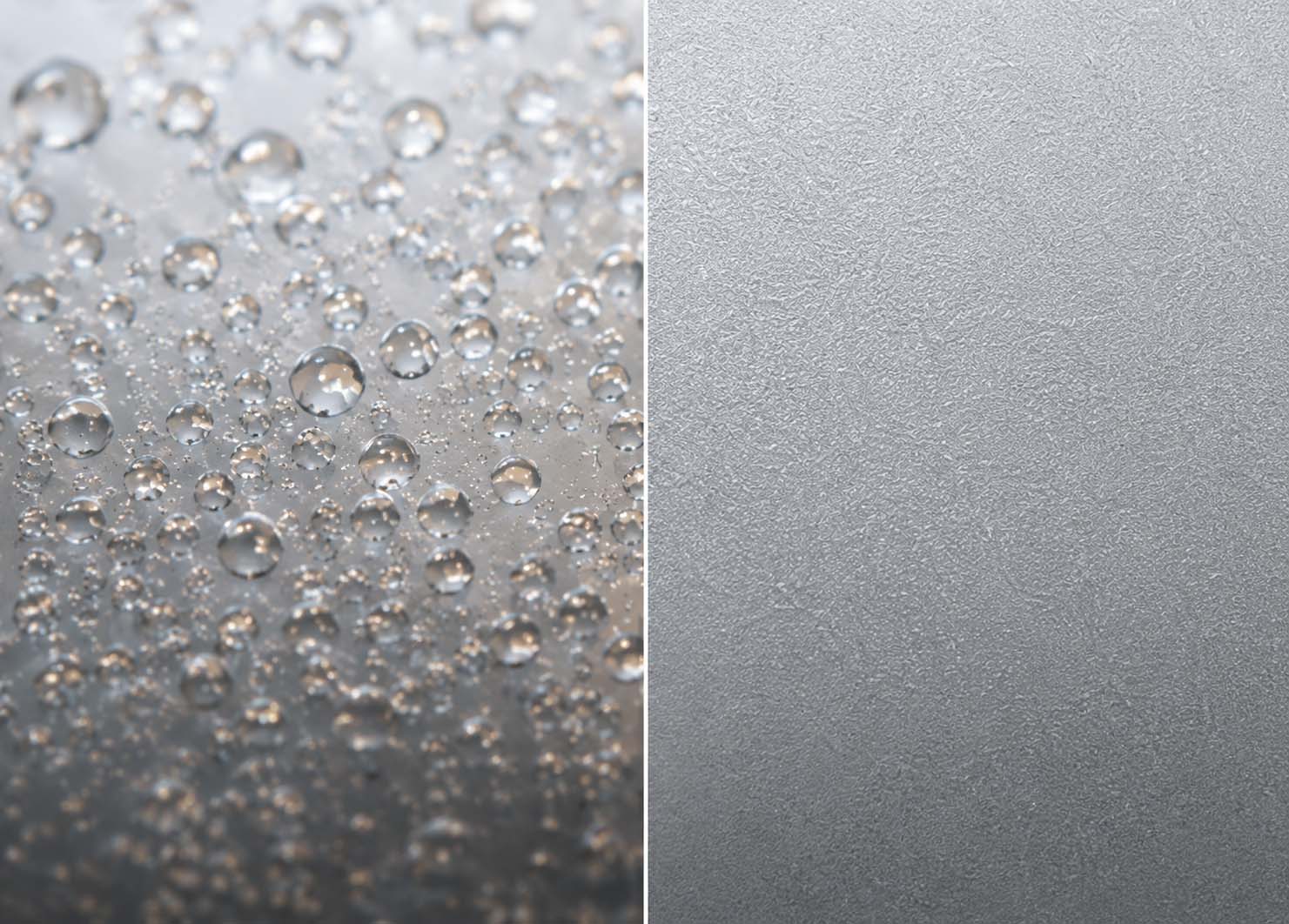
PDLC stands for polymer dispersed liquid crystal. With power applied, liquid crystals align to create a clearer viewing state. With power off, they scatter light into a frosted appearance.
For a retrofit installation, the film is applied to suitable existing glass and connected to a dedicated power supply. This is different from replacing the glass panel.
Inside the film
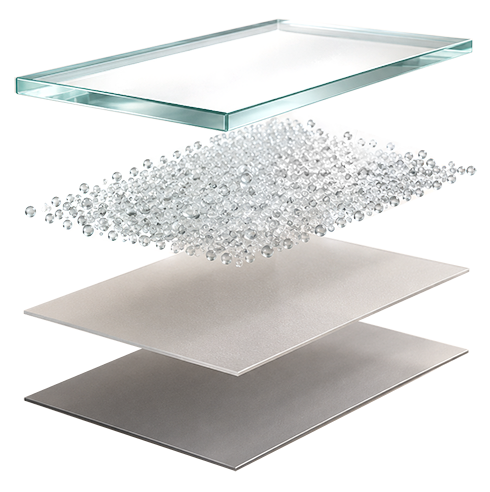
The illustration separates the construction so each layer is easy to understand. In use, these layers are bonded into one thin film applied directly to suitable existing glass.
The liquid crystal layer changes how light travels through the film when power is switched on or off. Protective and conductive layers support the finished system.
Power reaches the film.
Liquid crystals align for the viewing state.
Light scatters into a frosted appearance.

The film is installed after the glass and site are ready, but the cleanest wiring path is often decided during framing. That is when power supplies, wall controls, and automation connections can be coordinated behind the finishes.
For completed homes and offices, we assess practical retrofit routes without treating construction as a requirement.
See the Planning ProcessFrosted mode lets light through while obscuring the view.
Switch to clear mode when you want to see through the glass.
Change privacy with a control instead of moving a covering.
Add privacy without hanging blinds or curtains across the glass.
Choose controls that suit the people using the space.
Film selection, installation conditions, and recommended care all affect the finished system. We provide operating and maintenance guidance for the supplied film.
Follow the written care instructions for the exact supplied film. Avoid abrasive cleaning, and keep moisture away from film edges and electrical connections.
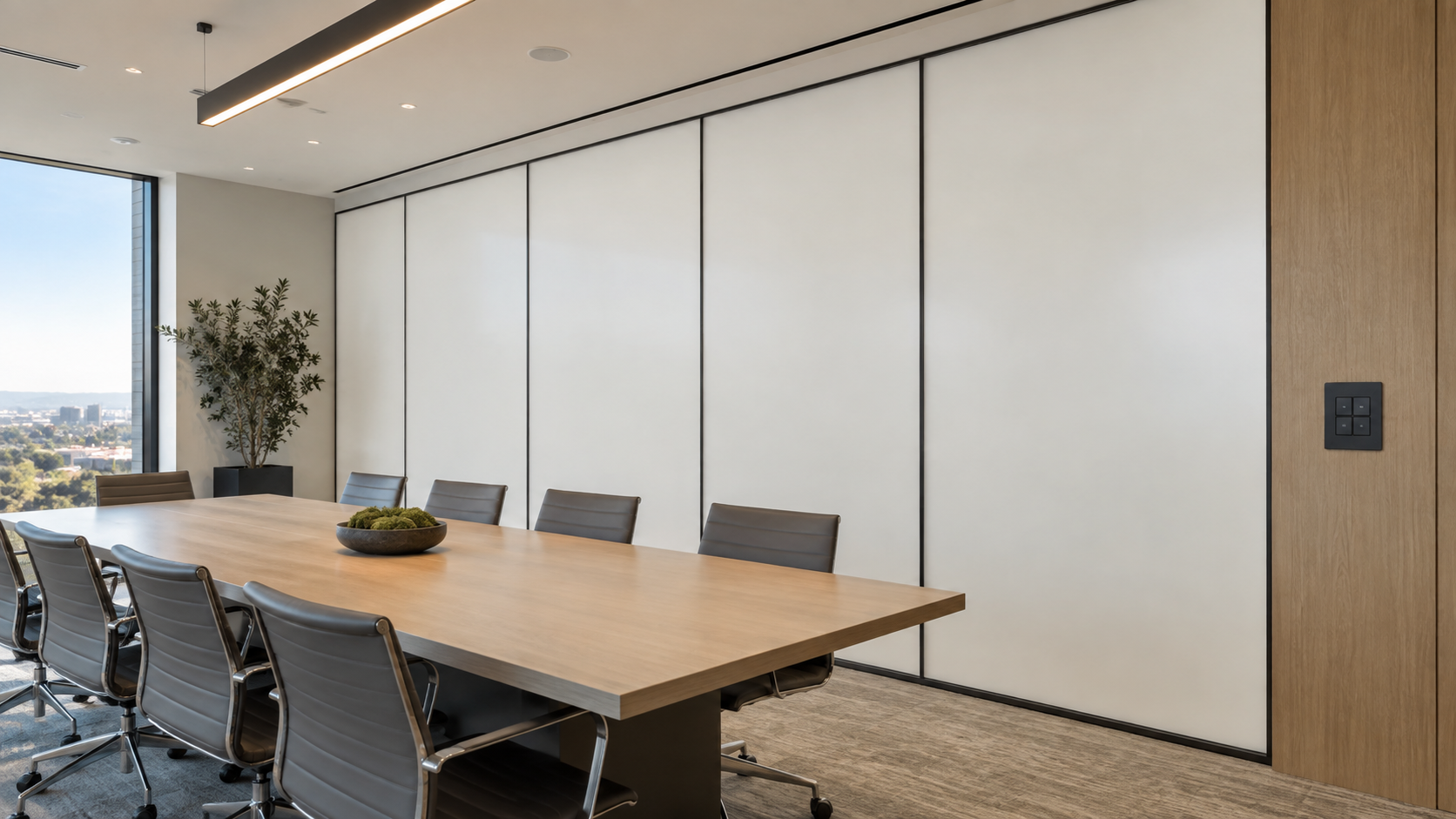
A dedicated remote offers straightforward operation. Wall controls and home or building automation may also be possible, depending on the system.
We review compatibility, wiring, and component locations for your project. Any required mains electrical work is handled by a qualified electrician.
People use these terms for electrically controlled window products, but the technology can differ. The clear-to-frosted privacy film described here uses PDLC, short for polymer dispersed liquid crystal. When comparing quotes, check the actual film and privacy state rather than relying on the name.
Compare film optionsRetrofit smart film is applied to suitable existing glass. Integrated switchable glass has its active layer within the glass assembly and is installed as a glass unit. If your glass is already in place, the first question is whether it is suitable for film.
Check installation requirementsSome haze can remain in clear mode, especially at an angle or under strong lighting. Review the selected film from the positions where you will use the room. A representative sample or demonstration can help you compare the appearance.
Frosted PDLC scatters light; it does not form an opaque wall. Strong backlighting or someone standing close to the glass can make shadows or silhouettes visible. Assess the selected film with the room lights on and from the relevant viewing positions when privacy is especially important.
Discuss your privacy needsIn frosted mode, the view is obscured in both directions. In clear mode, people can see through the glass. This differs from a one-way mirror effect that depends on the lighting on each side.
Standard clear-on PDLC returns to its frosted state when power is removed. The exact behavior depends on the selected product and system. Confirm it for your installation, especially where clear visibility is important.
A dedicated remote offers straightforward operation. Wall controls or compatible home and building automation can also be considered. Tell us the exact control platform so compatibility, power supplies and wiring can be reviewed before ordering.
See how the system is plannedThe supplied clear-film sheet lists power consumption of up to 4 W/m² while on; the deep-grey and black sheets list less than 5 W/m². These are film figures. Actual system use also depends on the power supply, controls, installed area and operating hours.
Discuss your project scope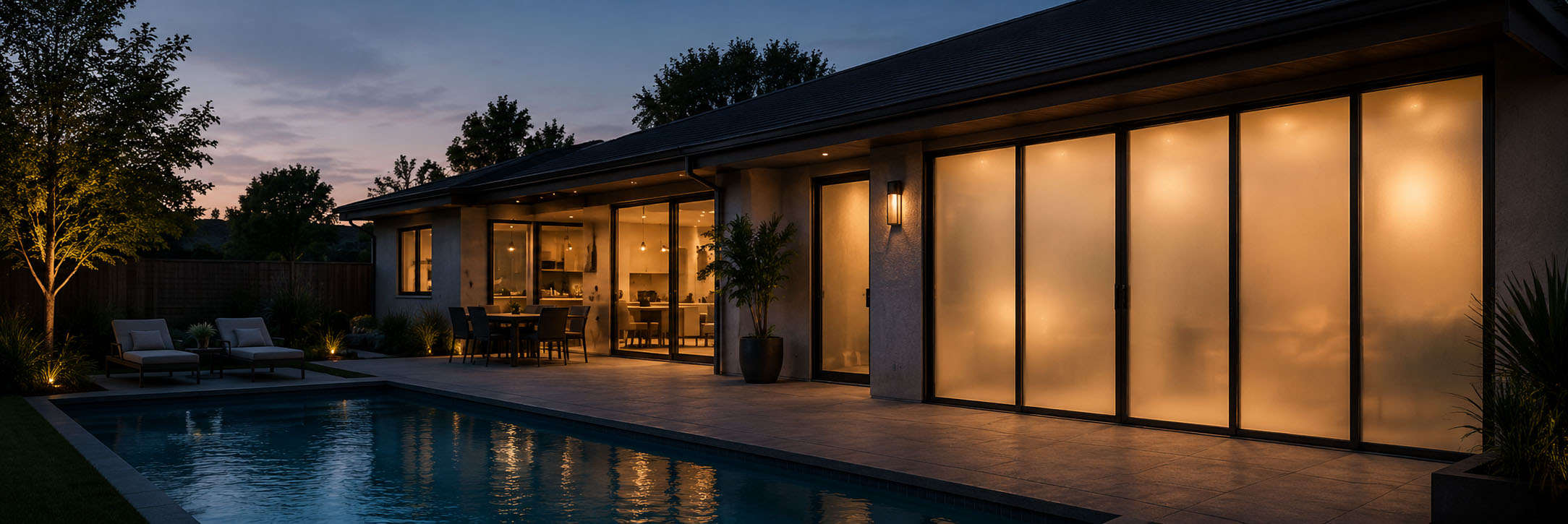
Tell us about your glass and any existing home or office control system. We’ll help identify the installation requirements.
Request an Estimate